How to Remove Mould from Walls — And Stop It Coming Back
Most people clean the same patch of mould off their walls three or four times before they realise the product isn't working. Here's why, and what actually removes it for good.

You've wiped it off. You've sprayed it. You might have painted over it. And a few weeks later, there it is again — the same dark patch in the same corner, spreading a little further each time.
If this sounds familiar, the problem isn't you. It's that most mould removal products sold in UK supermarkets and DIY stores are not designed to remove mould from walls properly. They clean the surface. They don't touch what's underneath it.
This piece will explain exactly why mould keeps returning to walls, what you actually need to do to remove it permanently, and which products do the job versus which ones waste your time and money.
Why Mould Grows on Walls in UK Homes
Mould on walls is almost always caused by one of two things: condensation or penetrating damp. In most UK homes — particularly older terraced houses, Victorian conversions and poorly insulated flats — condensation is by far the most common cause.
When warm, moist air inside a room meets a cold exterior wall, the moisture in the air condenses on the surface. Walls facing north or those with poor insulation are coldest and therefore most vulnerable. The moisture sits in the plaster and paint, and mould spores — which are present in the air of virtually every home — land on the damp surface and begin growing within 24 to 48 hours.
A large proportion of UK housing was built before modern insulation standards existed. Single-skin brick walls, solid stone walls and cavity walls without fill all conduct cold from outside, creating the perfect cold surface for condensation to form on.
Combine this with double-glazed windows that seal moisture inside a room, and central heating that cycles on and off throughout the day rather than maintaining a consistent temperature, and you have conditions that actively encourage mould growth on walls every single winter.
The bedrooms are often the worst rooms in the house for this reason. A person sleeping in a room produces a significant amount of water vapour overnight. If the bedroom has poor ventilation or is on an external wall, that moisture has nowhere to go. By morning it has settled on the coldest surfaces — typically the corners behind furniture and along external walls — and mould has already begun to grow.
Why the Mould Keeps Coming Back
This is the question most people never get a straight answer to. They clean the wall. The mould disappears. Three weeks later it is back, often darker and covering a larger area than before.
The reason is that mould is not a stain. It is a living organism with a root structure that grows beneath the surface of whatever it is growing on. When you wipe or spray the surface, you remove the visible growth. But the root system — called mycelium — remains embedded in the plaster, the paint or the wallpaper beneath.
"Surface cleaning removes what you can see. The root structure that brings it back stays put."
Give the wall a week or two of moisture, which UK homes provide reliably, and the root structure sends new growth to the surface. The mould comes back faster each time because the roots are more established.
Wiping with a damp cloth or kitchen spray clears surface growth but leaves roots completely intact.
Bleach sprays kill surface cells on contact but run off walls before they can penetrate deep enough to reach root structure.
Painting over mould without treating it first traps moisture and accelerates growth behind the paint layer. The mould comes through the new paint within weeks.
How to Remove Mould from Walls Properly
Removing mould from walls properly requires a product that can maintain contact with the surface long enough to penetrate through the paint or plaster layer and reach the root structure underneath. This is why the delivery method matters as much as the formula itself.
Step 1 — Identify the affected area
Check not just the visible patch but the surrounding area. Mould often spreads further than what is visible. Run your hand along the wall near skirting boards and in corners — if the surface feels slightly damp or papery, the mould may extend beyond what you can see.
Step 2 — Do not scrub first
Scrubbing mould on a wall releases spores into the air and damages the paint or plaster surface, making it easier for mould to take hold again. Apply the treatment first and let it do the work.
Step 3 — Apply a penetrating formula
A gel-based mould treatment is considerably more effective on walls than a spray. The reason is contact time. A spray runs down a vertical surface within a minute or two. A thick gel stays in place, maintaining contact with the wall for the full treatment duration — typically one to two hours — which gives the active formula time to penetrate into the surface.
Step 4 — Leave it, do not disturb it
Leave the treatment in place for the manufacturer's recommended time, usually between one and two hours. Do not wipe or scrub during this period. The formula needs sustained contact to penetrate properly.
Step 5 — Wipe away cleanly
After the treatment time, wipe the area with a damp cloth. The mould should come away cleanly. If it is a heavy infestation, a very light wipe with a soft cloth is acceptable, but significant scrubbing is a sign the product has not penetrated fully.
Step 6 — Address the moisture source
Even the most effective mould treatment is temporary if the wall continues to accumulate moisture. After treating, take steps to reduce condensation in the room. This is what keeps mould away long term.
Products That Work vs Products That Don't
After spending four weeks testing 22 mould removal products across real UK homes — including walls, ceilings, grout and silicone — a clear pattern emerged. The delivery method is decisive. Sprays consistently underperformed against gel products on vertical wall surfaces, regardless of the brand or the active ingredients.
| Product Type | Wall Adhesion | Root Penetration | Regrowth at 4 Weeks |
|---|---|---|---|
| Supermarket spray (bleach-based) | Runs off within 60–90 seconds | Surface only | Mould returned within 2–3 weeks |
| Antibacterial foam spray | Slightly better but still runs | Surface only | Mould returned within 2–4 weeks |
| Thick gel formula (NuroClean) | Clings for full 1–2 hour treatment | Penetrates to root structure | No regrowth at 4-week check |
The reason the gel product performed so differently comes down entirely to contact time on a vertical surface. On a wall, a spray is at a fundamental disadvantage. Gravity works against it from the moment of application. A thick gel that stays in place solves this problem completely.
The Product We Recommend for Walls
NuroClean Mould Remover Gel
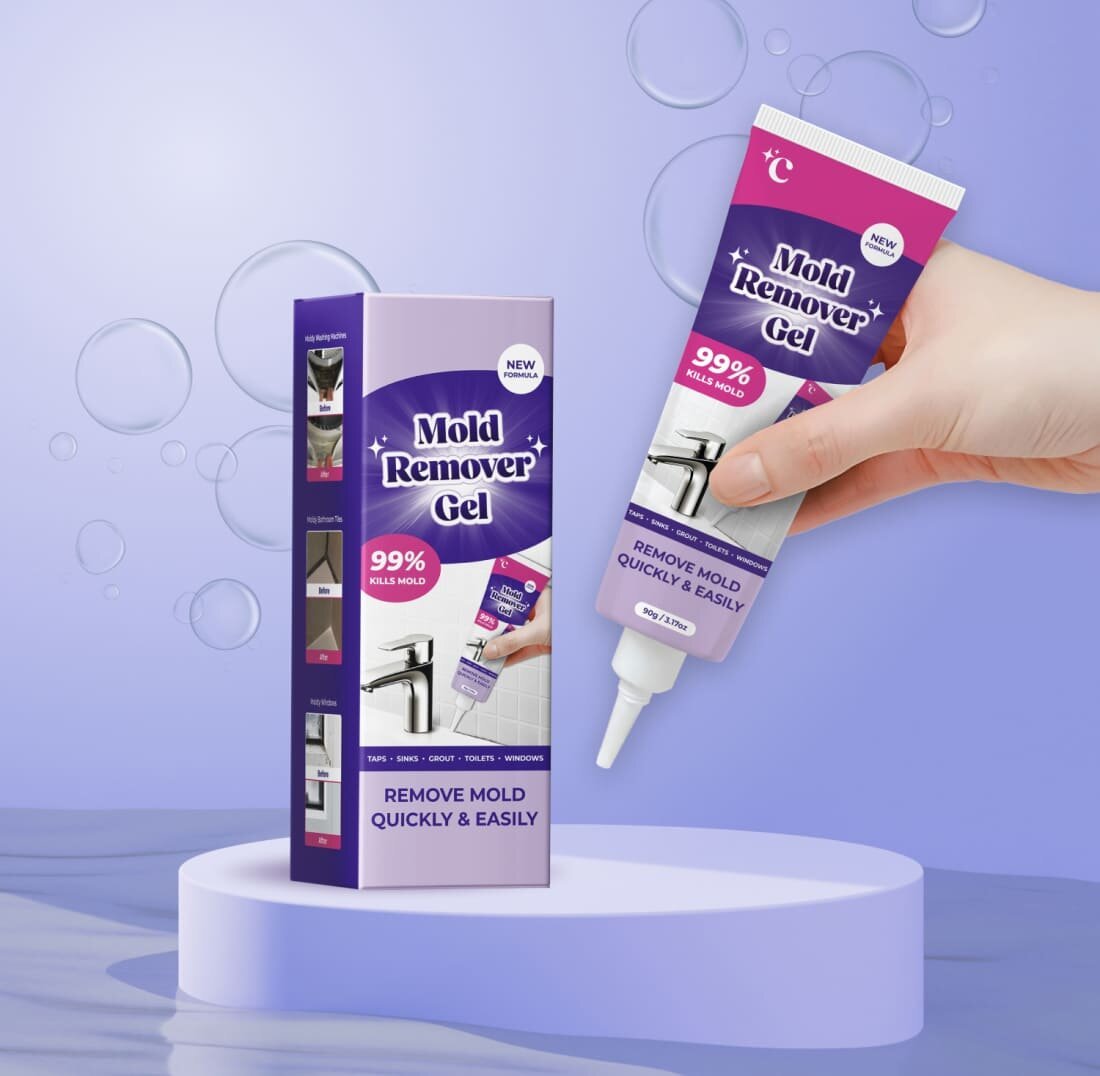
Why it works on walls specifically
NuroClean's thick gel formula was the only product in our testing that maintained consistent contact with a vertical wall surface for the full treatment period. While every spray product we tested had run off the wall within 90 seconds, NuroClean stayed exactly where it was applied for the complete two-hour treatment time.
The result was mould removed at the root, not just at the surface — and no regrowth at the four-week follow-up on any of the treated walls.
- Thick gel clings to vertical surfaces — does not run or drip
- Penetrates paint and plaster to kill mould at the root
- One application clears even heavy wall mould
- No scrubbing required — apply, wait, wipe
- Safe on painted walls, plaster and plasterboard
- No harsh chemical smell — no gloves required
- 30-day money-back guarantee
When to Call a Professional
In most cases, mould on walls is a surface problem that a good gel treatment and improved ventilation will resolve. But there are situations where professional involvement is warranted.
- The mould covers a large area — more than a square metre — and keeps returning despite treatment, which may indicate penetrating damp behind the wall rather than condensation
- The wall feels wet or soft to the touch, suggesting moisture is coming through from outside rather than condensing on the surface
- The mould is in a rented property and you are a tenant — in this case the landlord has a legal obligation to address the underlying cause under the Homes (Fitness for Human Habitation) Act 2018
- Anyone in the household has a respiratory condition and the mould is extensive — a professional assessment may be appropriate before treatment
For the vast majority of UK homeowners dealing with wall mould, a penetrating gel treatment and basic moisture control is sufficient. The issue is almost always the product being used, not the severity of the problem.
Product We Suggest for Wall Mould
NuroClean Mould Remover Gel is the product we recommend for anyone dealing with mould on interior walls. It is the only product in our testing that maintained contact with a vertical surface long enough to penetrate and kill the root structure — which is the only way to stop wall mould from coming back.
Available exclusively through the official website. A single tube is sufficient for most standard wall mould problems. Multi-tube bundles are available at a significant discount for larger areas or multiple rooms.
Check Current Availability and Pricing